Traffic robots may soon help direct vehicles, inspect roads, move goods, and protect people near busy streets. The useful question is not whether a robot can move through traffic, but whether it can do one job safely, repeatedly, and at a cost a city or company can carry.
Quick read
- Traffic robots will start with narrow jobs such as road inspection and delivery.
- Human control will remain necessary when sensors lose sight of the road.
- Buyers should ask for failure records, repair plans, and clear operating limits.
The first jobs will be narrow
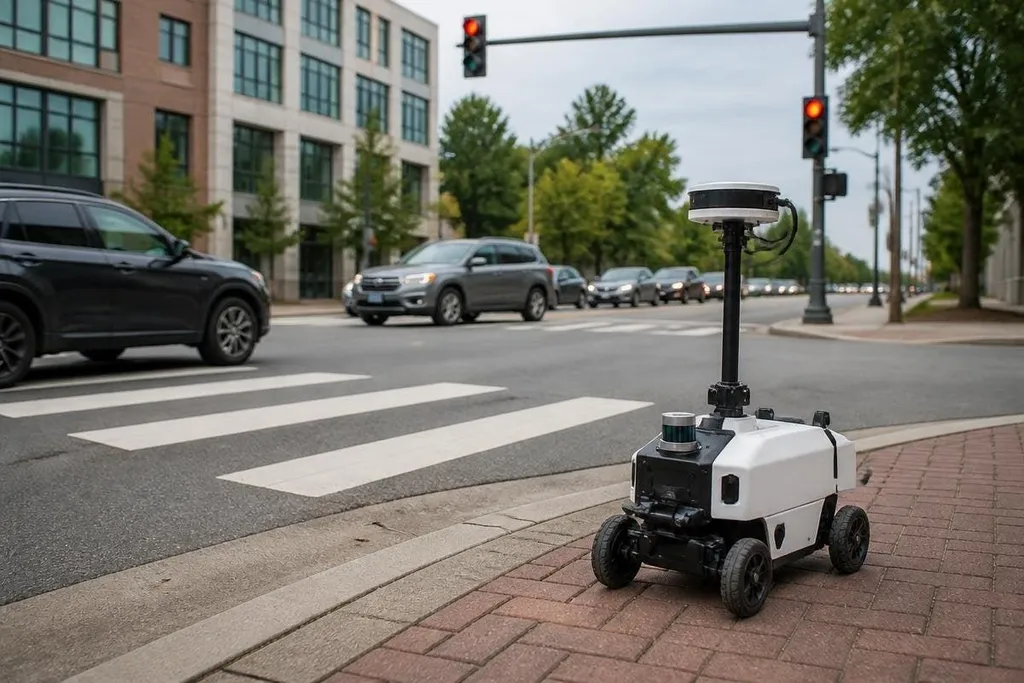
A robot working near traffic has to deal with cars, bicycles, pedestrians, weather, road signs, and blocked paths. That makes open public roads harder than a warehouse, where routes and hazards can be controlled.
The first useful systems are likely to handle defined tasks. A road robot could inspect pavement or signs along a set route. A delivery robot could move at walking speed on a mapped sidewalk. A traffic-control robot could place or collect signs in a work zone under remote supervision.
Each job limits the number of things the robot must understand. That matters because a machine can perform well in a fixed area while failing when the route, lighting, or traffic pattern changes. A sales video rarely shows that second part.
Sensors help, but they don't remove risk
Traffic robots will need cameras, radar, position data, and software that combines those inputs. A camera can read a sign, radar can detect an object, and mapping software can help the robot locate itself. Each tool has a failure case.
Rain can reduce camera detail. Parked vehicles can block a route. A fresh road layout can make an old map wrong. A sensor fault can also leave the robot with less information than its software expects.
That is why the useful design question is what happens after the robot becomes unsure. It may stop, ask a remote operator for help, or move to a safe waiting area. A system that stops safely may be more useful than one that keeps moving and makes a poor guess.
A traffic robot’s remote handoff needs its trigger, delay, location, and outcome recorded. Reports on traffic robots at Robot 24 can put those facts beside each trial before the next section asks how much control a person should keep.
Human control will remain part of the system
Remote supervision does not mean one person can safely watch an unlimited number of robots. The operator needs a clear video feed, a way to speak to people nearby, and controls that work when the network is slow.
The handoff also matters. A robot may handle a known route by itself, then stop when a police officer changes the traffic pattern or a work crew blocks the lane. The operator must understand the problem quickly enough to choose the next action.
This creates a second cost beyond the robot. A buyer may need a control room, trained staff, network coverage, spare batteries, and a plan for recovery after a stop. Those details can decide whether a pilot becomes a working service.
What remains unproven
No evidence pack was supplied for this topic, so there is no verified price, deployment count, date, or measured result to attach to a named traffic robot here.
That limit matters: broad claims about the future should not be treated as proof that a product works on public roads.
The harder tests will take place outside controlled demonstrations. Buyers should ask for records from the exact route and weather conditions they care about, along with details of every human intervention.
A useful check looks like this:
- Define the route: record road type, speed limits, crossings, and places where the robot must stop.
- Set failure rules: state when the robot stops, calls an operator, or leaves the route.
- Count human help: measure how often staff take control and how long each event lasts.
- Price the support: include charging, repairs, insurance, network service, and staff time.
- Test public contact: check how the robot signals its intent to drivers, cyclists, and pedestrians.
A practical test for the next system
The best early traffic robot may look modest. It could inspect one road, carry goods along one mapped path, or support one work crew instead of trying to manage an entire city.
I'd skip any system that cannot show its stop rules and human-intervention record. The next purchase should wait for evidence from the route itself, with failures counted beside successful trips; that is where the future of traffic robots will be decided.